

DR. R.G.S.VARA PRASAD
B.Pharm., MS, Ph.D.
A seasoned pharmaceutical professional with strong expertise in product development, project management, and regulatory strategy. Proven ability to lead end-to-end formulation development, from concept to commercialization, while ensuring quality, compliance, and cost efficiency. Specialized in oral thin film technology, driving innovative and patient-friendly drug delivery solutions. Passionate about advancing pharmaceutical innovation and delivering globally competitive healthcare products.
BOOK CHAPTERS
Invited Book Chapters:
1. M.E. Hoque, R.G.S.V.Prasad and S.M.Sapuan (2014) Type: chapter Book: Encyclopedia of Biomedical Polymers and Polymeric Biomaterials
Chapter: Conducting Polymers for Drug delivery and Tissue engineering Applications
Page numbers: 13
ISBN: 978-1-43989-879-6 | USA | Editors: M. Mishra.
Publisher: CRC Press Taylor & Francis Group
ABSTRACT
Conducting polymers (CPs) have recent attracted much interest as suitable materials for drug delivery, tissue engineering, and simulative implantable biomedical devices. The ease preparation, sensitivity, and stability of these CP are the key criteria for choosing these CPs such applications. In addition to the abo mentioned properties, CPs can be functionalize modified, and made biocompatible using various doping techniques. CP substrates also impact various biological cues that can guide cells in specific architectures, which is a key factor tissue engineering applications.
This applicability of CPs to enhance cellular adhesion, proliferation, and differentiation will open up new avenues in regenerative medicine and bioengineering. Moreover due to their inherent property to alter their redox state, CPs are establishing their utility in drug delivery applications. Controlled drug release from CPs has been reported since 1980s. With continued development of these polymers in clinical applications, CP-based drug delivery systems (DDSs) have been reported very recently. These smart and next generation controlled release technologies could merge the biosensing properties of CPs with their drug- delivering abilities to develop versatile delivery systems with controlled release rates. These smart DDSs will help in patient compatibility towards medication where the release rate of the drug can be controlled by stimulating these CPs externally.
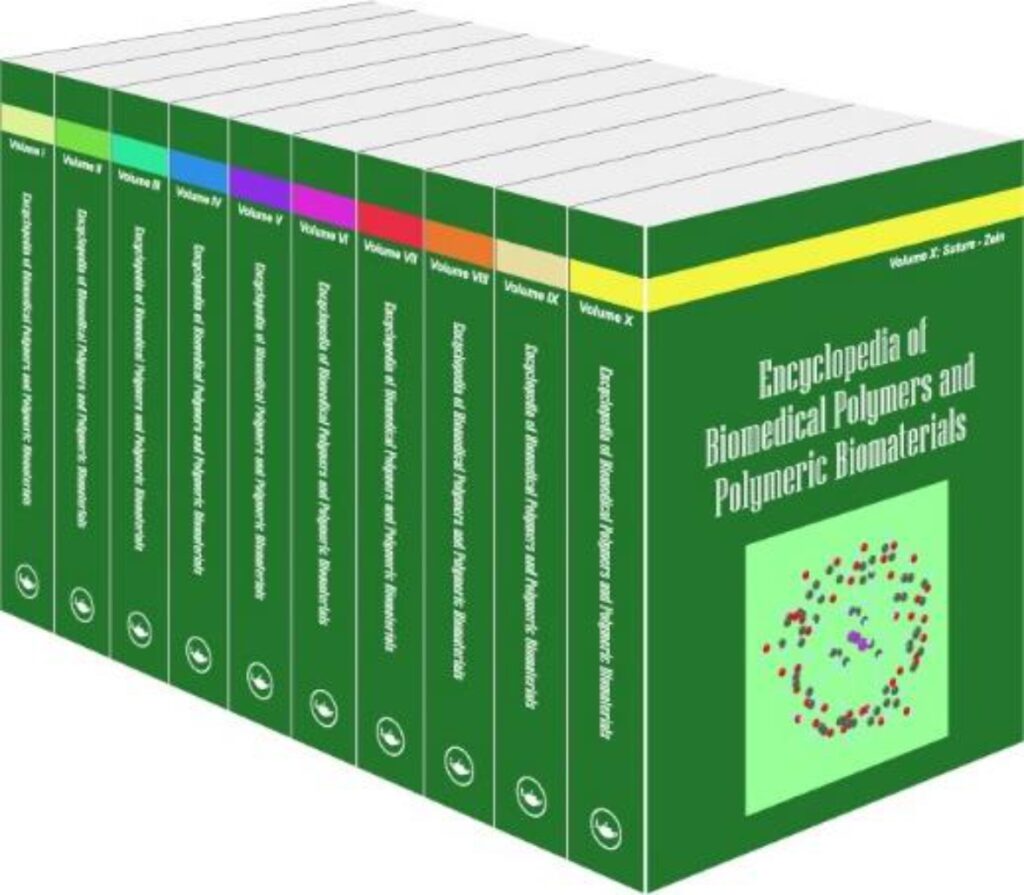
2. M.E. Hoque , R.G.S.V.Prasad , R.S.L.Aparna and S.M.Sapuan (2014) Type: chapter Book: Encyclopedia of Biomedical Polymers and Polymeric Biomaterials Chapter: Nanofibers: Drug delivery
Page numbers: 20
ISBN: 978-1-43989-879-6 | USA | Editors: M. Mishra.
Publisher: CRC Press Taylor & Francis Group
ABSTRACT
Electrospinning is a simple, versatile, and efficient process by which polymeric nanofibers can be produced using an electrostatically driven jet of polymer solution on to a substrate. Extensive research has been done in past decades to explore their properties and applications in fi elds of biomedicine, pharmaceutics, waste water treatment, etc. In the field of drug delivery, electro spun nanofibers show great promise for developing many types of control release formulations based on the need.
The sub-micron fibers produced by the electrospinning process provide various advantages like tunable porosity, high surface area to volume ratio, and the ability to tailor the nanofibers with the desired composition in order to achieve a specific function. The current research is based on electro spun nanofiber-based drug delivery through drug-loaded nanofiber preparations. Various polymers, drugs, and solvents have been explored for this purpose. With the above mentioned perspectives, we discussed various advantages, types of electrospinning techniques, regulating factors, and drugs that can be loaded onto or into the nanofiber matrix in this entry.
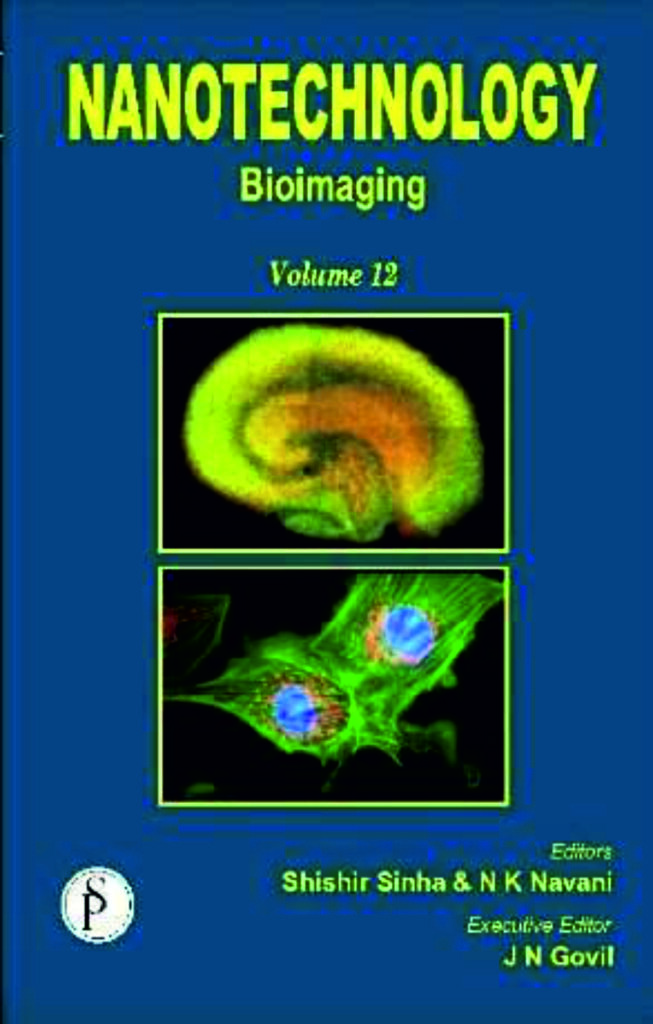
3. R.G.S.V.Prasad, Nilesh Prakash Nirmal and M. Enamul Hoque (2014) Type: chapter Book: Nanotechnology (series)
Chapter: 3D organ printing- Future designer organs
Page numbers: chapter 11, pp 285-307
ISBN: 1-626990-11-5 | USA | Editors: J.N.
Publisher: Govil Publisher
ABSTRACT
Tissue engineering/regenerative medicine promises to solve problems in organ transplantation crisis. However, converting cell seeded scaffolds into vascularized 3D soft organs remains as bottle neck to be solved. 3D Organ printing, offers a possible solution to this problem by controlling various physio-chemical properties of tissue-engineered living human organs. Basically organ printing involves three main stages like preprocessing or development of ‘blueprints’ for organs; processing or actual organ printing; and post processing or organ conditioning and accelerated organ maturation.
3D cell printer can print hydrogels along with cells which help in depositing layer-by-layer sequentially to form complete tissue construct. Attempts have been made to produce vital organs like bone, liver, heart, blood vessels and skin using this technique. Interdisciplinary approach from branches like engineering, biology and physics is essential in developing 3D organ printing technology. In this chapter we attempted to discuss the utility of 3D organ printing in development of various organs. Eventually this branch of science will solve the major problems involved in organ transplantation. Furthermore this technology can also be effectively utilized in drug delivery, drug screening and in biomedical research.
LIST OF PATENTS :
1. R.G.S.V.Prasad, Sirisha and A.R.Phani; Dental cement composition; US15672317
2. R.G.S.V.Prasad,K.Sandeep and A.R.Phani; Cyclosporine formulations; IN201641032495
3. R.G.S.V.Prasad, R.S.L.Aparna and A.R.Phani; Scaffold Compositions for Tissue repair, PCT/IB2017/057811
4. R.G.S.V.Prasad, R.S.L.Aparna, Harish.T and A.R.Phani; Pharmaceutical compositions of lignocaine HCL; PCT/IB2018/054729
5. R.G.S.V.Prasad,K.Sandeep and A.R.Phani; Ophthalmic compositions of Cyclosporine; PCT/IB2018/055757
6. R.G.S.V.Prasad, R.S.L.Aparna and A.R.Phani; Tranexamic acid spray for knee arthroplasty; PCT/IB2018/056900
7. R.G.S.V.Prasad; Orally disintegrating Strips of Calcium Supplements; IN201841009265
8. R.G.S.V.Prasad; Ophthalmic compositions of tamarind seed polysaccharide;
IN201841014329
9. R.G.S.V.Prasad; Oral disintegrating film compositions of paracetamol;
IN201841014660/US11202756B2
10. R.G.S.V.Prasad and K.Ounghbo; Polyethyleneimine/ Simvastatin acid nanoparticles (PEI- SVA-NPs) by self assembly process as potential carriers for bone tissue engineering;IN201741008709
11. R.G.S.V.Prasad; Green Tea Filim composition;IN201941000551
12. R.G.S.V.Prasad , K.Venkatnarayana: Orally disintegrating film composition of ketorolac and a method of preparation thereof PCT/IB2022/052710
13. R.G.S.V.Prasad , K.Venkatnarayana: Oral dispersible film comprising L-Methylfolate and process thereof IN202141051686
14. R.G.S.V.Prasad , K.Venkatnarayana: Ready to drink coffee strips/films and method of processing thereof IN202241005399
15. R.G.S.V.Prasad , K.Venkatnarayana: A Black tea ready to drink film and the method thereof IN202241028538
16. R.G.S.V.Prasad , K.Venkatnarayana: Oral dispersible film comprising senna and process thereof
17. R.G.S.V.Prasad , K.Venkatnarayana: Oral dispersible film comprising amla and process thereof IN202241026212
18. R.G.S.V.Prasad , K.Venkatnarayana, R.S.L.Aparna and K Sandeep: Cetrizine ophthalmic solution and the method thereof IN202241028539
19. R.G.S.V.Prasad , K.Venkatnarayana: Ready to drink electrolye film/strip and the preparation method thereof: IN202241031490
20. R.G.S.V.Prasad , K. Venkatnarayana: Tadalafil orally dispersible films and preparation method therof IN202241042076
LIST OF PUBLICATIONS :
1. R.G.S.V.Prasad and Oungbho, Kwunchit. “Controlled Release of Polyethyleneimine-Simvastatin Acid Nanoparticles from Conducting Matrices and Their Osteogenic Potential.” Asian Journal of Pharmaceutics): 12, no. 01 (2018).
2. Roopalakshmi, S., R. Ravishankar, Shrisha Belaldavar, RGS V. Prasad, and
A.R. Phani. “Investigation of Structural and Morphological Characteristic of Hydroxyapatite Synthesized by Sol-Gel Process.” Materials Today: Proceedings 4, no. 11 (2017): 12026-12031.
3. Aparna, RSL., R.G.S.V.Prasad, and Nilesh Prakash Nirmal. “An Injectable In-Situ Conducting Thermosensitive Gel for Controlled Delivery of Vancomycin in Osteomyelitis Treatment and Bone Regeneration.” Science of Advanced Materials 8, no. 7 (2016): 1470-1477.
4. Yousefi, Azizeh‐Mitra, Md Enamul Hoque, R.G.S.V.Prasad, and Nicholas Uth. “Current strategies in multiphasic scaffold design for osteochondral tissue engineering: a review.” Journal of biomedical materials research Part A 103, no. 7 (2015): 2460-2481.
5. Nirmal, Nilesh P., Mithun S. Rajput, R.G.S.V.Prasad, and Mehraj Ahmad. “Brazilin from Caesalpinia sappan heartwood and its pharmacological activities: A review.” Asian Pacific journal of tropical medicine 8, no. 6 (2015): 421-430.
6. Hoque, M. Enamul, Tamrin Nuge, Tshai Kim Yeow, Norshariza Nordin, and R.G.S.V.Prasad. “Gelatin based scaffolds for tissue engineering-a review.” Polymers Research Journal 9, no. 1 (2015): 15.
7. Shankar, Shiv, R.G.S.V.Prasad, P. R. Selvakannan, Lily Jaiswal, and R. S. Laxman. “Green synthesis of silver nanoribbons from waste X-ray films using alkaline protease.” Materials Express 5, no. 2 (2015): 165-170.
9. Kumar, G. Prem, Jagadeesh S. Sanganal, A. R. Phani, C. Manohara, Syamantak
M. Tripathi, H. L. Raghavendra, P. B. Janardhana, S. Amaresha, K. B. Swamy, and R.G.S.V.Prasad. “Anti-cancerous efficacy and pharmacokinetics of 6- mercaptopurine loaded chitosan nanoparticles.” Pharmacological research 100 (2015): 47-57.
10. Pradeep, Sai Aditya, G. Prem Kumar, A. R. Phani, R.G.S.V. Prasad, M. Enamul Hoque, and H. L. Raghavendra. “Fabrication, characterization and in vitro osteogenic potential of polyvinyl pyrrolidone-titania (PVP-TiO) nanofibers.” Analytical Chemistry Letters 5, no. 2 (2015): 61-72.
11. Shankar, Shiv, Lily Jaiswal, Rangabhatla Sai Laxmi Aparna, Rangabhatla Gunneswara Subramanya Vara Prasad, Govindappa Prem Kumar, and Channakeshava Murthy Manohara. “Wound healing potential of green synthesized silver nanoparticles prepared from Lansium domesticum fruit peel extract.” Materials Express 5, no. 2 (2015): 159-164.
12. Shiv Shankar, Lily Jaiswal, R.S.L.Aparna and R.G.S.V.Prasad* Preliminary assessment of biocompatability and antimicrobial activity of green synthesized gold, silver and gold silver alloy nanoparticles by aqueous extract of Lansium domesticum pericarp. Mater lett. 137(2014)75-78
13. Prem Kumar, G., A. R. Phani, Sai Aditya Pradeep, R. G. S. V. Prasad, and H. L. Raghavendra. “Preparation and Characterization of Nanofibrous Solid Dosage Form Containing Enrofloxacin.” Analytical Chemistry Letters 4, no. 5-6 (2014): 364-371.
14. Hoque, M. Enamul, Terrence Teh Hooi Meng, Y. Leng Chuan, Moniruddin Chowdhury, and R. G. S. V. Prasad. “Fabrication and characterization of hybrid PCL/PEG 3D scaffolds for potential tissue engineering applications.” Materials Letters 131 (2014): 255-258
15. Kumar, G. Prem, A. R. Phani, R. G. S. V. Prasad, Jagadeesh S. Sanganal, N. Manali, R. Gupta, N. Rashmi et al. “Polyvinylpyrrolidone oral films of enrofloxacin: Film characterization and drug release.” International journal of pharmaceutics 471, no. 1-2 (2014): 146-152.
16. R. G. S. V. Prasad, and K. O. Oungbho. “Conducting chitosan-g-PANI incorporated fish gelatin/chitosan scaffolds for bone tissue engineering applications.” In JOURNAL OF TISSUE ENGINEERING AND REGENERATIVE MEDICINE, vol. 8, pp. 337-338. 111 RIVER ST, HOBOKEN 07030-5774, NJ USA: WILEY-BLACKWELL, 2014.
17. Nirmal, N. P., R. G. S. V. Prasad, and S. Keokitichai. “Wound healing activity of standardized brazilin rich extract from Caesalpinia sappan heartwood.” Journal of Chemical and Pharmaceutical Research 6, no. 10 (2014): 195-201.
18. Sophee, S. S., R. G. S. V. Prasad, J. V. Srinivas, R. S. L. Aparna, and A. R. Phani. “Antibacterial activity of TiO2 and ZnO microparticles combination on water polluting bacteria.” Journal of Green Science and Technology 1, no. 1 (2013): 20-26.
19. Shamalah, M., R. S. L. Aparna, R. G. S. V. Prasad, and A. R. Phani. “Photocatalytic Effect of TiO2 and the effect of dopants on degradation of pharmaceutical dye (sunset yellow).” Journal of Green Science and Technology 1, no. 1 (2013): 14-19.
20. Karunanithy, Premvanan, R. G. S. V. Prasad, Venkata Srinivas Jakka, R. S. L. Aparna, A. R. Phani, G. S. Prabhakara, and Syed Azar Ahmed. “Enhanced antimicrobial activity polyaniline grafted chitosan.” Advanced Science, Engineering and Medicine 5, no. 5 (2013): 420-426.
21. Yehgambaram, Pavithra, R. G. S. V. Prasad, Venkata Srinivas Jakka, R. S. L. Aparna, and A. R. Phani. “Antifungal activity of nanostructured polyaniline combined with fluconazole.” Journal of Pharmacy Research 6, no. 1 (2013): 26-31.
22. Hoque, M. E., and R. G. S. V. Prasad. “Rapid Prototyping Technology in Bone Tissue Engineering.” J Appl Mech Eng 2 (2013): e124.
23. Sathasivam Manikam, R.S.L.Aparna and R.G.S.V.Prasad*. Photocatyalytic effect of titanium dioide nanoparticles and the effect of copper as a dopant in degradation of dibutylpthlate and butylhydroxyanisole. J. Bionanosci. 7, 569-575 (2013).
24. Shamalah Munusamy, R.S.L.Aparna, R.G.S.V.Prasad and A.R. Phani,Photocatalytic effect of TiO2 and the effect of dopants on degradation of brilliant green. Sustain Chem Process ,2013,1(4).
25. R.G.S.V.Prasad and M.Murali, Effect of Cardorium plus on oxidative stress in hyperlipidimic chick model,This work was highlighted in Ayurvedic magazine,2013, 8(2) :41.
26. R.G.S.V.Prasad*, Revathy Davan, Shankar Jothi, A.R.Phani and D.B.Raju, Cerium oxide nanoparticles protects gastrointestinal mucosa from ethanol induced gastric ulcers in in-vivo animal model. Nano Biomed. Eng. 2013, 5(1), 46-49.
27. SK. Raziya begum, M.Mohan Varma, D.B.Raju, R.G.S.V.Prasad * , and A.R.Phani,
Enhancement of Dissolution Rate of Piroxicam by Electrospinning Technique. Adv. Nat. Sci: Nanosci. Nanotechnol, 3 (2012) 045012 (4pp).
28. R.G.S.V.Prasad*,A.R.Phani, Biju Jacob and Paul C. Salins .Nanoparticles for bone tissue engineering, Trends Biomater. Artif. Organs, 26(4), 197-201(2012).
29. Srujana.K,R.G.S.V.Prasad*1,R.S.L.Aparna Preliminary screening for H.pyroli from dental plaques J. Pharm.Res,2012,5(8),4195-4198.
30. Kaveeta Pergas Jotiram, R.G.S.V. Prasad*, Venkata Srinivas Jakka, R.S.L.Aparna and A.R. Phani ,Antibacterial Activity of Nanostructured Polyaniline Combined with Mupirocin. Nano Biomed. Eng. 2012, 4(3), 144-149.
31. R. G. S. V. Prasad*,J. L. Endrino, Nishanth Kumar Jain, Goutham Reddy, D. Basavaraju, K. N. Rao, C. S. Naveen, and A. R. Phani, Synthesis and antimicrobial properties of TiO2 and TiO2 -Cu thin films synthesized by cost effective sol-gel process, Adv. Sci. Eng. Med. 4, 279–287 (2012).
32. R.G.S.V.Prasad*, K. S.V. Chaitanya, M. Tejoram , D. Basavaraju, K.N.Rao , R. Rakesh Kumar, S. Sreenivasan and A.R.Phani, Antibacterial Properties of Nanofiber Structured Conducting Polyaniline synthesized by Cost Effective Wet Chemical Process, J. Pharm.Res 2012,5(1),370-373.
33. Aminabee Sk, Prabhakar MC, Prasad R.G.S.V , Lakshmana Rao A, and Ram Mohan Rao CH , Invitro pharmacological activity of biosurfactant, Int. Journal of pharmaceutical, chemical and biological sciences, vol-2,130-133,2012.
34. S.K. Aminabee, M.C. Prabhakara, R.G.S.V. Prasad and A. Lakshmana Rao, Screening the Pharmacological Activity of Cerium Oxide Nanoparticles In vitro,Biomed.& Pharmacol.J.,Vol.,4,No 2 ,287-289(2011).
35. Prasad, R. G. S. V*.; Basavaraju, D.; Rao, K. N.; Naveen, C. S.; Endrino, J.; Phani, A. R.; , Nanostructured TiO2 and TiO2-Ag Antimicrobial Thin Films, NanoBioscience, IEEE Transactions on,vol.no.,pp.1-6,8, 10Dec. 2011. doi:10.1109/NSTSI.2011.6111808.
36. J. L. Endrino, R.G.S.V.Prasad, D. Basavaraju, K.N.Rao, C.S. Naveen, A.R.Phani Antimicrobial properties of nanostructured TiO2 plus Fe additive thin films synthesized by a cost-effective sol-gel process, Nanosci. Nanotechnol. Lett. 3, 629-636 (2011).
37. R.G.S.V.Prasad*, D. Basavaraju, K.N. Rao, C.S. Naveen, J. Endrino, A.R. Phani.Nanostructured TiO2 and TiO2-Ag antimicrobial thin films.Nanotech 2011.,vol-3.,271-273,2011.ISBN:978-1-4398-7138-6
http://www.nsti.org/procs/Nanotech2011v3/3/W7.410 Editor(s): Nanoscience and Technology Inst., Massachusetts.