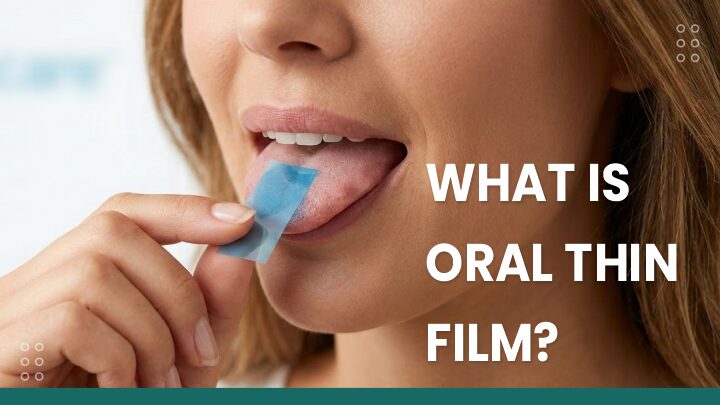
What is Oral thin film? The future of drug delivery
The pharmaceutical industry is increasingly exploring oral thin films (OTFs) as a novel and effective drug delivery system, offering a promising alternative to conventional dosage forms. As research and technological advancements continue to evolve, thin film technology is gaining global attention for its versatility in delivering rapid, local, and systemic therapeutic effects.
The oral route is the most preferred route of drug administration for achieving systemic effects. Approximately 60% of pharmaceutical formulations existing as solid dosage forms such as tablets and capsules due to their stability, cost-effectiveness, and ease of use. However, these conventional forms often present swallowing difficulties, who cannot easily access water.
Oral thin films address these challenges by providing a convenient, fast-dissolving, and patient-friendly alternative. Designed to disintegrate rapidly in the oral cavity, these films enable quick drug release and absorption. In certain cases, they may also partially bypass hepatic first-pass metabolism, thereby enhancing bioavailability and enabling a faster therapeutic response.
Table of Contents
What Are Fast Dissolving Oral Thin Films?
Oral Thin Films, popularly known as OTFs, are a modern way to take medication by mouth. These thin films contain a blend of film-forming polymers, plasticizers, active pharmaceutical ingredients (APIs), and other additives, all designed to dissolve quickly when placed on the tongue.
Recently, fast-dissolving films have gained more attention than traditional fast-dissolving tablets. This shift marks a new trend in oral drug delivery, where patients prefer innovative and convenient options over conventional dosage forms.
How Do Oral Thin Film Drugs Work?
Oral Thin Film Technology ensures rapid absorption, and they dissolve quickly in saliva, enabling rapid absorption through the oral mucosa, bypassing first-pass metabolism and enhancing bioavailability, which can reduce required doses and side effects. OTFs are particularly useful for poorly soluble drugs and allow for precise dosing.
Key steps in oral thin film mechanism include:
- Convenience and Portability: Oral thin films are lightweight, compact, and easy to carry, making them ideal for on-the-go consumption without the need for water.
- Fast Absorption and Rapid Action: Because the films dissolve quickly in the mouth, they can provide faster absorption compared to traditional tablets.
- Improved Patient Compliance: OTFs are particularly beneficial for children, elderly patients, and individuals with swallowing difficulties, helping improve medication adherence.
- Accurate Dosage and Stability: Each strip delivers a precise dose, ensuring consistency and reliability in treatment.
- High Bioavailability: Oral thin films can enhance bioavailability by allowing active ingredients to be absorbed directly through the oral mucosa, bypassing the digestive system and first-pass metabolism in the liver. This enables faster onset of action and improved effectiveness compared to conventional tablets or capsules.
- Precision in Dosing: The films ensure uniform distribution of the drug, providing accurate and consistent dosages.
Why Are Fast Dissolving Oral Thin Films Needed?
Oral thin film strips are emerging as a modern and effective alternative to conventional oral dosage forms such as tablets. Designed for rapid disintegration in the oral cavity without the need for water, these fast-dissolving strips offer a convenient and user-friendly approach to drug delivery.
Upon placement on the tongue or any moist surface within the mouth, the strips quickly dissolve within seconds, releasing the active ingredients for absorption. This feature makes them particularly advantageous for pediatric and geriatric populations, as well as for individuals who experience difficulty swallowing, effectively minimizing the risk of choking and improving overall patient compliance.
In addition to their ease of use, oral thin film strips are characterized by their ultra-thin, flexible structure and appealing design, and can be developed in various shapes and sizes to enhance user experience. Their ability to adhere to the oral mucosa further supports efficient drug delivery. With their combination of convenience, rapid action, and patient-centric design, oral thin film strips are gaining significant attention as a next-generation solution in pharmaceutical and nutraceutical applications.
Advantages of Oral Thin Films Over Traditional Dosage Forms
Oral Thin Films (OTFs) offer several distinct advantages compared to conventional oral dosage forms such as tablets and capsules, making them an increasingly preferred choice in modern drug delivery:
- Rapid onset of action due to fast disintegration and efficient absorption in the oral cavity
- Water-free administration, enabling convenient use anytime and anywhere
- Enhanced patient compliance, particularly for pediatric, geriatric, and dysphagic patients
- Improved bioavailability through partial avoidance of first-pass metabolism in certain formulations
- Highly portable and easy to store owing to their compact and lightweight nature
- Flexible and customizable dosing, including the possibility of combining multiple active ingredients in a single film
- Better stability for sensitive compounds, especially moisture-sensitive APIs
- Effective taste masking, improving patient acceptance through advanced flavoring and coating techniques
- Scalable and efficient manufacturing, supported by modern continuous processes such as slot-die coating
Looking for innovative oral dissolving strip manufacturing? Visit Oral Thin Film Manufacturer |
The Future of Oral Thin Film Technology
The future of OTF technology appears promising, with researchers advancing innovative solutions such as moisture-resistant polymers, nanotechnology-enhanced drug loading, and intelligent polymer systems. The integration of these innovations with rigorous quality control measures is progressively mitigating existing limitations while preserving the distinct advantages of this dosage form.
When it comes to medication administration methods, Oral Thin Films (OTFs) are a game-changer because of the simplicity, accuracy, and adaptability they provide. The development of OTFs has allowed for the creation of patient-centric medication that caters to the specific requirements of various demographics, such as younger patients, the elderly, and those who have trouble swallowing, by overcoming the drawbacks of conventional dose forms, including pills, syrups, and tablets.
Polymer, nano, and continuous manufacturing advancements are progressively overcoming obstacles such as flavor masking, production costs, and moisture sensitivity. By offering quicker action, more flexibility, and better patient compliance, OTFs have the ability to transform the way medicine is delivered.
Oral thin films are in the vanguard of healthcare’s pursuit of easily accessible and efficacious remedies; they exemplify the ideal meeting point of medical research, technological advancement, and individual patient attention. Without a doubt, OTFs represent a giant stride towards a pharmaceutical environment that is more efficient and patient-friendly, whether we’re talking about the treatment of chronic disorders or the delivery of life-saving pharmaceuticals in emergency situations.
Conclusion
Fast dissolving oral thin films are transforming modern drug delivery by combining rapid onset of action, ease of administration, and enhanced patient compliance. Their versatility makes them particularly suitable for individuals with swallowing difficulties, while also supporting a wide range of pharmaceutical and nutraceutical applications.
With advancements in manufacturing technologies such as precision coating techniques, oral thin films can be developed with high uniformity, consistency, and scalability. This enables a smooth transition from research to large-scale production, ensuring quality and efficiency.
As healthcare continues to evolve toward more patient-centric and innovative solutions, oral thin films are emerging as a reliable and future-ready dosage form, offering safer, more convenient, and effective delivery of active ingredients.