Revolutionizing Medication Administration: Oral Dissolving Films for Patient Compliance
Revolutionizing Medication Administration: Oral Dissolving Films for Patient Compliance
Oral Dissolving Films — also called oral thin films (OTF), oral dissolving strips (ODS), or fast dissolving oral films — are thin, flexible strips containing an active pharmaceutical ingredient (API) that dissolve rapidly when placed on the tongue or inside the cheek.
Unlike tablets or capsules, oral dissolving films require no water, no chewing, and no swallowing of a solid form. The film makes contact with saliva, begins to dissolve within seconds, and releases the active ingredient directly into the oral mucosa — enabling fast absorption into the bloodstream.
Originally developed in the late 1970s as breath-freshening strips, oral dissolving film technology has evolved significantly over the past two decades into a clinically validated pharmaceutical drug delivery platform used across dozens of therapeutic categories — from anti-emetics and CNS medications to vitamins, analgesics, and erectile dysfunction treatments.
Oral Dissolving Films Patient Compliance
Medication only works when patients take it — and for hundreds of millions of people worldwide, taking a conventional tablet or capsule is a genuine challenge.
Elderly patients who struggle to swallow. Children who refuse tablets. Patients experiencing nausea, vomiting, or Parkinson’s disease who cannot reliably manage solid oral dosage forms. For all of these patients, oral dissolving films (ODF) represent a genuine clinical breakthrough — not just a convenient alternative.
In this article we explore what oral dissolving films are, how they work, who benefits most from them, and why this technology is becoming one of the fastest-growing segments in pharmaceutical drug delivery today.
How Do Oral Dissolving Films Work?
The mechanism of action behind oral dissolving films is what makes them clinically superior to conventional oral dosage forms for many patient populations.
When placed on the tongue or buccal mucosa, the hydrophilic polymer matrix of the ODF absorbs saliva rapidly. This triggers disintegration of the film and release of the active ingredient — which is then absorbed directly through the oral mucosa into the systemic circulation.
Key Delivery Advantages Of Why Oral Dissolving Films Outperform Traditional Tablets
Bypass of First-pass Hepatic Metabolism
When a tablet is swallowed and travels through the gastrointestinal tract, the active ingredient is partially metabolized by the liver before reaching systemic circulation — reducing bioavailability. Sublingual and buccal ODF delivery bypasses this first-pass effect entirely, meaning more of the active ingredient reaches the bloodstream intact.
Faster Onset of Action
Because the drug is absorbed directly through the oral mucosa without needing to pass through the stomach and intestines, therapeutic onset is significantly faster than with conventional tablets. This is particularly valuable for medications used in acute situations — anti-nausea drugs, pain relief, and sleep aids.
Looking for innovative oral dissolving strip manufacturing? Visit Oral Thin Film Manufacturer |
Who Benefits Most from Oral Dissolving Films?
The patient compliance advantages of oral dissolving films are most significant for four specific patient populations — and understanding these populations explains why ODF adoption is accelerating so rapidly across pharma and nutraceuticals.
Pediatric Patients:
Administering medication to children is one of the most persistent challenges in pharmaceutical care. Children frequently resist tablets and capsules, struggle to swallow them safely, or spit them out — creating inconsistent dosing and poor therapeutic outcomes.
Oral dissolving films address this challenge directly. The thin strip format can be flavored and sweetened to improve palatability, dissolves almost instantly without requiring the child to swallow a solid object, and can be administered far more reliably than conventional dosage forms. For pediatric medications, ODF technology is increasingly becoming the dosage form of choice.
Geriatric Patients:
Swallowing difficulty (dysphagia) affects an estimated 15% of the elderly population — and up to 68% of nursing home residents experience some degree of swallowing impairment. For geriatric patients, the inability to safely swallow tablets and capsules is not merely inconvenient — it is a genuine health risk, associated with choking, aspiration, and medication non-compliance.
Oral dissolving films eliminate the swallowing requirement entirely, making medication administration significantly safer and more reliable for elderly patients living independently or in care settings.
Patients with Dysphagia and Neurological Conditions:
Dysphagia — difficulty swallowing — affects patients with a wide range of neurological conditions including Parkinson’s disease, multiple sclerosis, stroke, and mucositis. For these patients, conventional solid oral dosage forms are frequently impractical or unsafe.
Oral dissolving films offer a water-free, swallow-free alternative that can be administered even to bedridden patients and those with severe swallowing impairment — making ODF technology an important tool in palliative and long-term care settings.
Patients Requiring Acute, Fast-Acting Medication:
For patients experiencing nausea, vomiting, acute pain, or anxiety — conditions where fast therapeutic onset is critical and where swallowing a tablet may be difficult or impossible — oral dissolving films provide a rapid-onset alternative. Anti-nausea medications like Ondansetron ODS, sublingual pain relief films, and fast-acting anxiolytics are all effectively delivered via ODF technology.
Key Components of Oral Dissolving Films
Every oral dissolving film is a carefully formulated system of functional ingredients working together to deliver the active pharmaceutical ingredient safely, reliably, and palatably:
Active Ingredient (API): The therapeutic compound — the medicine itself. The API must be present in precise, uniform quantities in every strip to ensure consistent dosing.
Film-Forming Polymer: The structural backbone of the ODF — typically a hydrophilic polymer such as HPMC, PVA, or pullulan. The polymer matrix determines dissolution rate, mechanical strength, and drug release profile.
Plasticizers: Compounds that improve the flexibility and mechanical integrity of the film, preventing cracking or brittleness during manufacturing, packaging, transport, and handling.
Surfactants: Surface-active agents that enhance the wetting and dissolution of the film on contact with saliva — critical to achieving the rapid dissolution times that define ODF performance.
Saliva-Stimulating Agents: Ingredients that promote saliva production, accelerating the dissolution of the film — particularly important for patients with dry mouth conditions.
Sweeteners and Flavoring Agents: Essential for palatability, particularly in pediatric and nutraceutical ODF products. Effective taste-masking of bitter APIs is one of the most technically demanding aspects of ODF formulation.
Coloring Agents: Used to provide visual identification, product differentiation, and consumer appeal — particularly relevant for branded ODF products.
Benefits of Oral Dissolving Films Over Conventional Dosage Forms
The advantages of ODF technology over tablets, capsules, and liquid syrups are well-documented across clinical and commercial contexts:
Enhanced Bioavailability:
By enabling sublingual and buccal absorption that bypasses first-pass hepatic metabolism, oral dissolving films can deliver higher effective concentrations of active ingredient to systemic circulation compared to equivalent oral tablet doses — often enabling lower total doses with equivalent therapeutic effect.
Rapid Onset of Action:
ODF dissolution within seconds means active ingredient absorption begins almost immediately — significantly faster than tablets or capsules that must dissolve in the stomach before absorption can begin.
No Water Required:
Oral dissolving films dissolve using only the saliva naturally present in the mouth. This makes them ideal for travel, emergency use, post-surgical patients, and any situation where water access is limited.
Improved Patient Compliance:
Research consistently shows that dosage form convenience is one of the most significant drivers of medication adherence. Patients who find their medication easy and comfortable to take are more likely to take it consistently — and consistent adherence is the foundation of effective long-term treatment.
Accurate and Consistent Dosing:
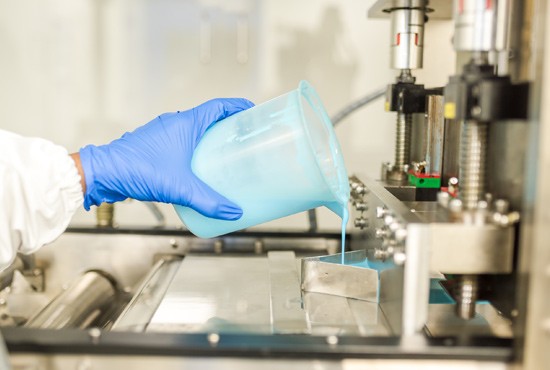
Advanced manufacturing processes — particularly solvent casting — ensure that each oral dissolving film strip contains precisely the specified quantity of active ingredient, with uniformity verified through rigorous quality control testing.
Portable and Discreet:
Individual foil-packaged ODF strips are thin, lightweight, and easily carried in a pocket or bag — making medication administration discreet and convenient in any setting.
No Adverse GI Effects:
Because the active ingredient bypasses the gastrointestinal tract in many ODF delivery mechanisms, the gastric irritation, acidity, and GI side effects associated with some oral medications are reduced or eliminated.